
Case study 02 · Systems modelling
Agent-Based
Market Simulation
A behavioural simulation that asks how changing market participation and strategy shifts can produce boom-and-bust cycles without an external shock.
Model
Three behaviours, one evolving market.
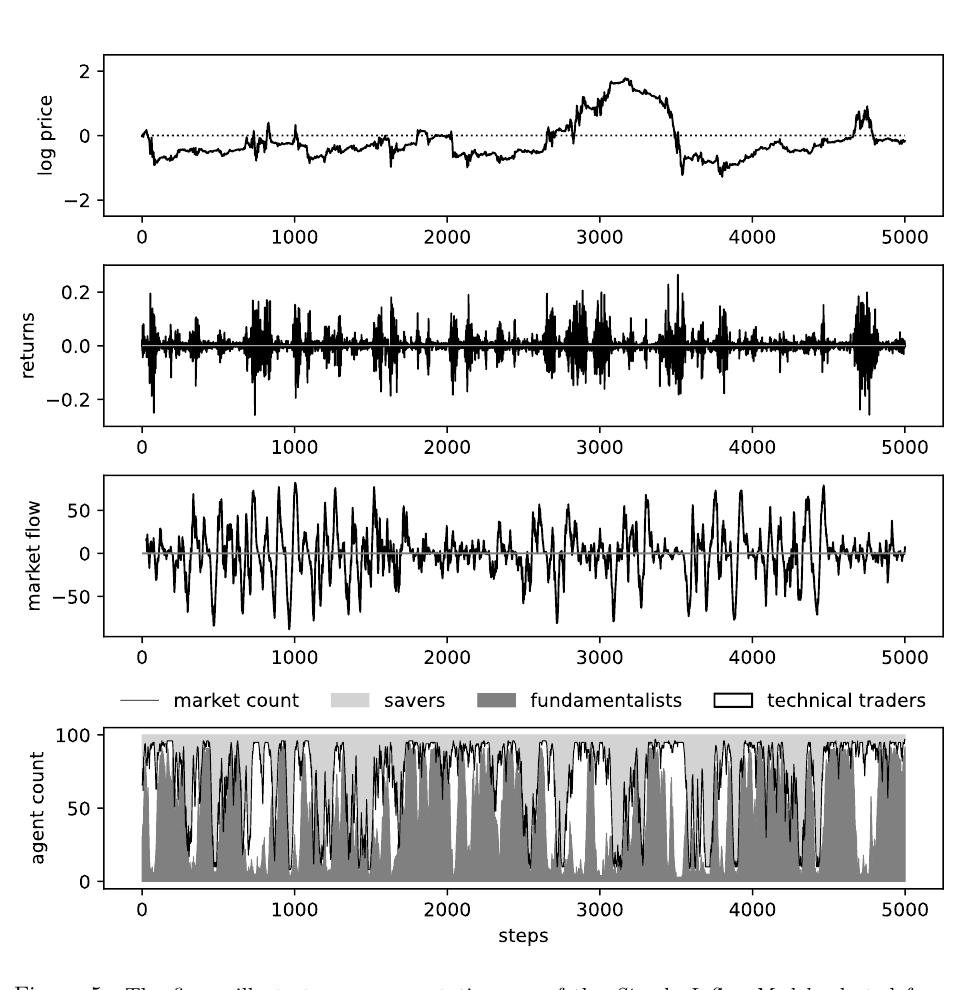
The model introduces savers alongside fundamental and technical traders. Savers participate when market strategies outperform saving; traders can switch strategy through relative performance and social interaction. Their changing mix feeds back into price formation.
Result
Participation dynamics create regime shifts.
- Inflows are endogenous. Strategy performance can draw savers into the market and amplify prevailing dynamics.
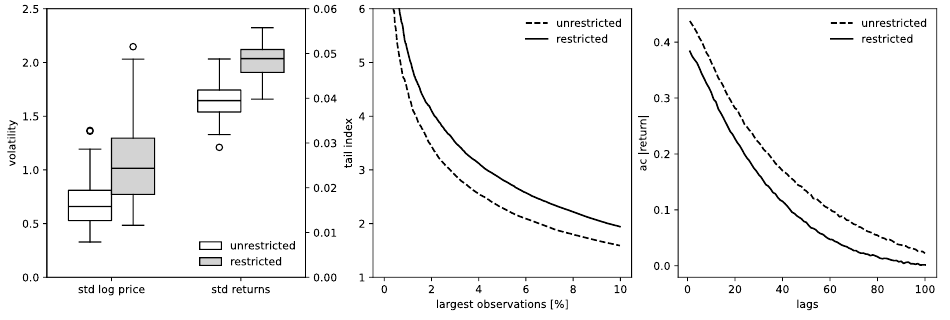
- FOMO raises volatility. Restricting new entrants to trend-following behaviour produces stronger price variability.
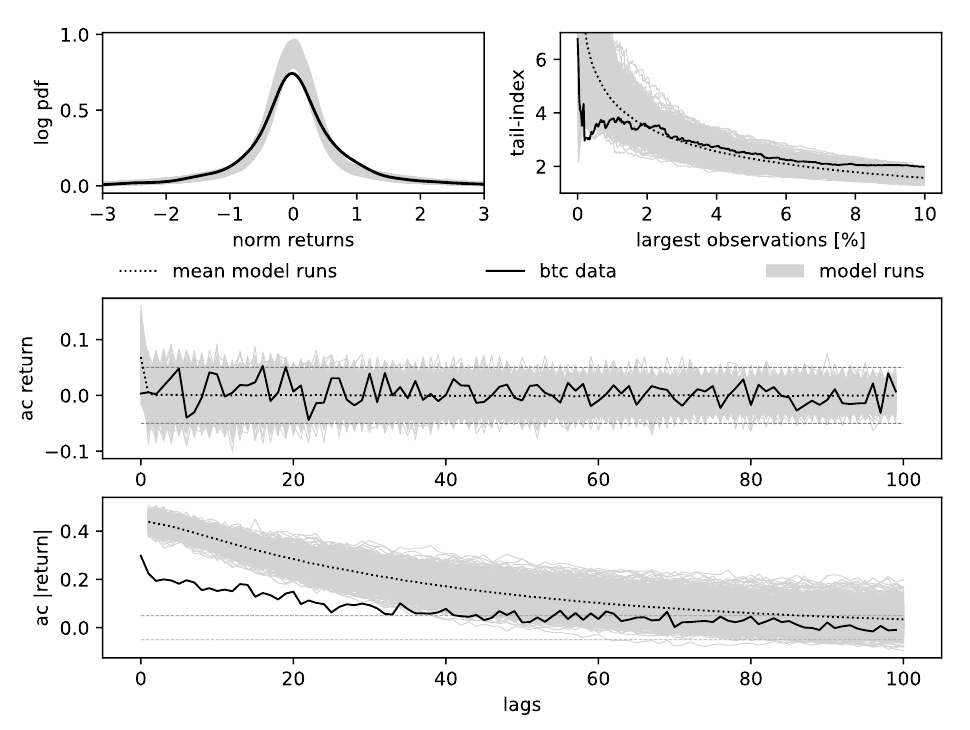
- The model is empirically grounded. Distributional and temporal properties are compared against the Bitcoin analysis.
Interactive model
Explore the system directly.
Adjust a small set of meaningful parameters in a dedicated NetLogo Web simulation and observe how the agent population, market flow and price path respond.
Open the simulationContext: Independently authored research and engineering project, developed as a B.Sc. Economics thesis at Leipzig University.